
How to Store Firearms Safely at Home

How to Store Firearms Safely at Home
Whether you own one firearm or an entire collection, safe storage is one of the most important responsibilities of gun ownership. Improper storage can lead to accidents, theft, or misuse, especially in homes with children or visitors. In this guide, we’ll explain how to store firearms safely and securely, including tips for gun safe storage, understanding gun storage laws, and ensuring your firearms are accessible when needed but protected from unauthorized use. How to Store Firearms
Why Safe Gun Storage Matters
Storing your firearms properly prevents:
-
Accidental discharge or injury
-
Unauthorized access by children or intruders
-
Theft or illegal use of your firearms
-
Legal consequences for negligence
Gun safety starts at home, and proper storage is the foundation of responsible gun ownership. Fortunately, there are several ways to secure your firearms effectively.
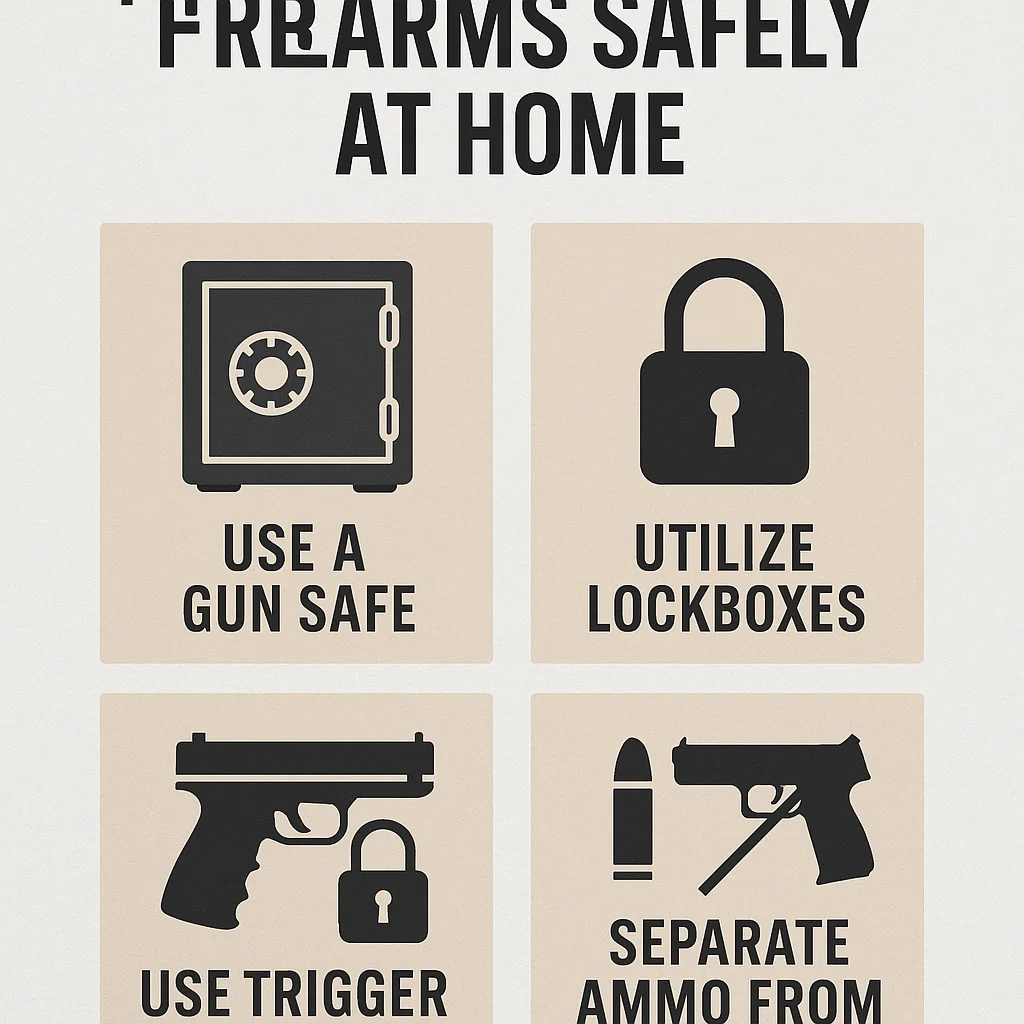
1. Use a High-Quality Gun Safe
The most secure and widely recommended method of gun safe storage is investing in a solid, fireproof gun safe. A gun safe is especially important if you own multiple firearms or want to store them for long periods.
Features to look for:
-
Heavy-duty steel construction (minimum 12-gauge)
-
Fireproof and waterproof rating
-
Digital or biometric locking systems
-
Internal lighting or dehumidifiers
A quality gun safe keeps firearms secure and compliant with most gun storage laws. Plus, many insurance policies offer lower premiums if firearms are properly stored.
2. Utilize Lockboxes for Handguns
For handguns you may need quick access to (such as for home defense), a secure lockbox offers a balance between security and accessibility.
Best for:
-
Nightstands
-
Closets
-
Vehicles
Opt for biometric or keypad models that open quickly in an emergency but remain locked at all other times.
3. Use Trigger Locks or Cable Locks
Trigger and cable locks are inexpensive yet effective tools that add another layer of safety—especially in households with children.
-
Trigger locks prevent the trigger from being pulled.
-
Cable locks block the chamber or action from functioning.
These devices should never be your only method of how to store firearms, but they provide an added layer of security when used with other storage options.
4. Separate Ammo from Firearms
Always store ammunition in a separate, locked container away from your firearms. This extra precaution reduces the risk of unauthorized or accidental discharge.
Ammo storage tips:
-
Use a separate lockable box or cabinet.
-
Keep it dry and at a stable temperature.
-
Label calibers to avoid confusion.
Some gun storage laws require this separation—especially in states with strict child safety legislation.
5. Know Your State’s Gun Storage Laws
Gun storage laws vary significantly by state and even by county. Some states mandate that firearms be locked up when not in use, while others require specific types of safes in homes with children.
Common legal requirements include:
-
Using tamper-resistant storage devices
-
Preventing access by minors
-
Quick-access safes for defensive firearms
-
Penalties for unsafe storage if injury or theft occurs
Always review your local and state laws regarding firearm storage. Visit your state’s Department of Justice or a reputable firearms attorney’s website for the most current information.
6. Educate Family Members on Firearm Safety
Even if your firearms are properly stored, educating your household on safe behavior around guns is crucial. Teach your family:
-
Never touch a gun without permission and supervision.
-
Assume every gun is loaded.
-
Notify an adult immediately if they see an unsecured firearm.
For gun owners with children, consider enrolling in family-friendly gun safety courses offered by NRA-certified instructors or local ranges.
7. Maintain and Inspect Your Storage Equipment
Like firearms, your storage equipment should be inspected and maintained regularly:
-
Check locks for functionality.
-
Ensure batteries (for digital locks) are charged or replaced.
-
Clean and lubricate hinges and mechanical components.
-
Test biometric scanners periodically.
Don’t wait until an emergency to discover your gun safe won’t open.
Final Thoughts
Learning how to store firearms properly is just as critical as learning how to use them. Safe storage not only protects you legally and financially, but also helps save lives. Whether through a full-sized gun safe, compact lockboxes, or multiple layers of security, responsible gun safe storage shows respect for your rights and for those around you.
Remember to review your state’s gun storage laws, upgrade your security as your collection grows, and always make safety your top priority.
Need Secure Gun Storage Options?
Check out our Gun Safe & Storage Gear Collection — featuring fire-rated safes, biometric lockboxes, and portable solutions for any budget.
Related Articles: